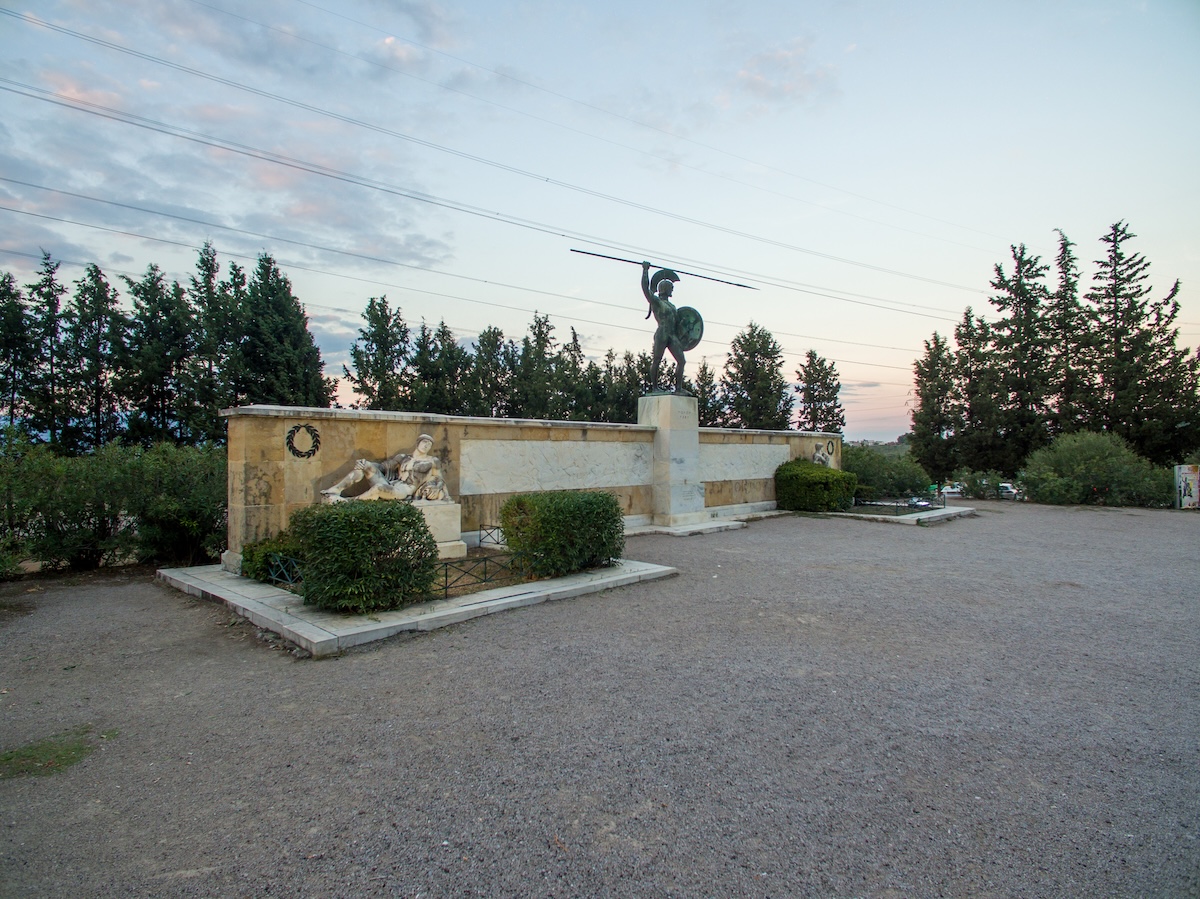
The renowned French architect speaks to protothema.gr and journalist Thanasis Diamantopoulos about the groundbreaking project he envisions in a place that has been associated since antiquity with the fearless spirit of the Greeks.
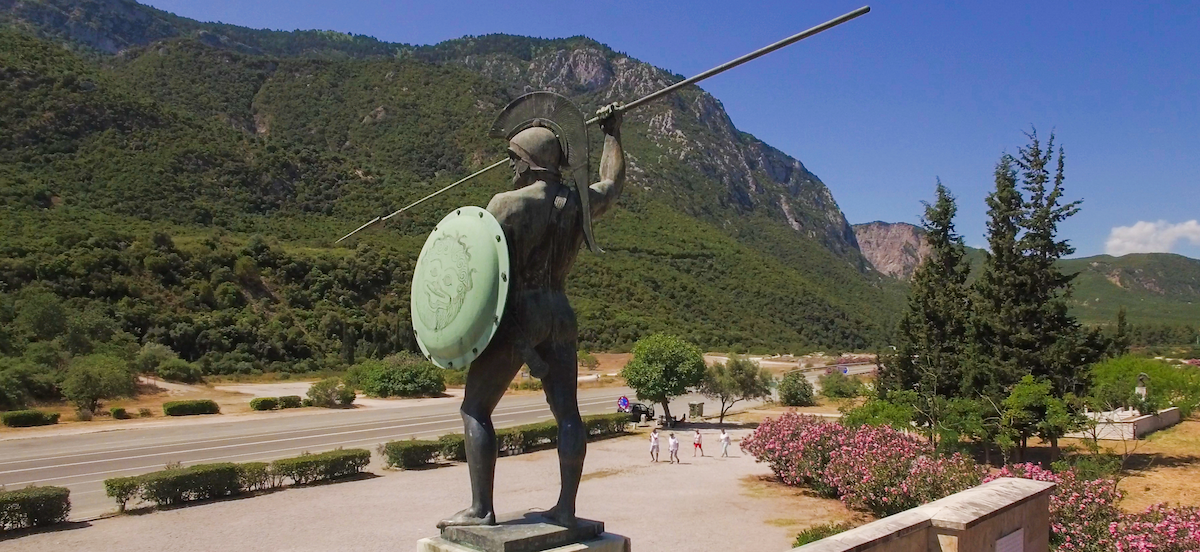
Known for his organic wooden structures, such as his “temple” at Burning Man in 2018 and the recent “Concordia” installation at Place de la Concorde in Paris, French architect Arthur Mamou-Mani is bringing his way of working to Greece: a living museum at Thermopylae. This new project, larger in scale than his previous works, will expand the existing infrastructure of the Thermopylae Historical Information Center (KIETh), which was inaugurated in 2010. In this way, it will create a more complete experiential museum, with physical structures, walking routes and interactive elements embedded in the landscape, honoring the strength and courage of Leonidas’ 300 Spartans.

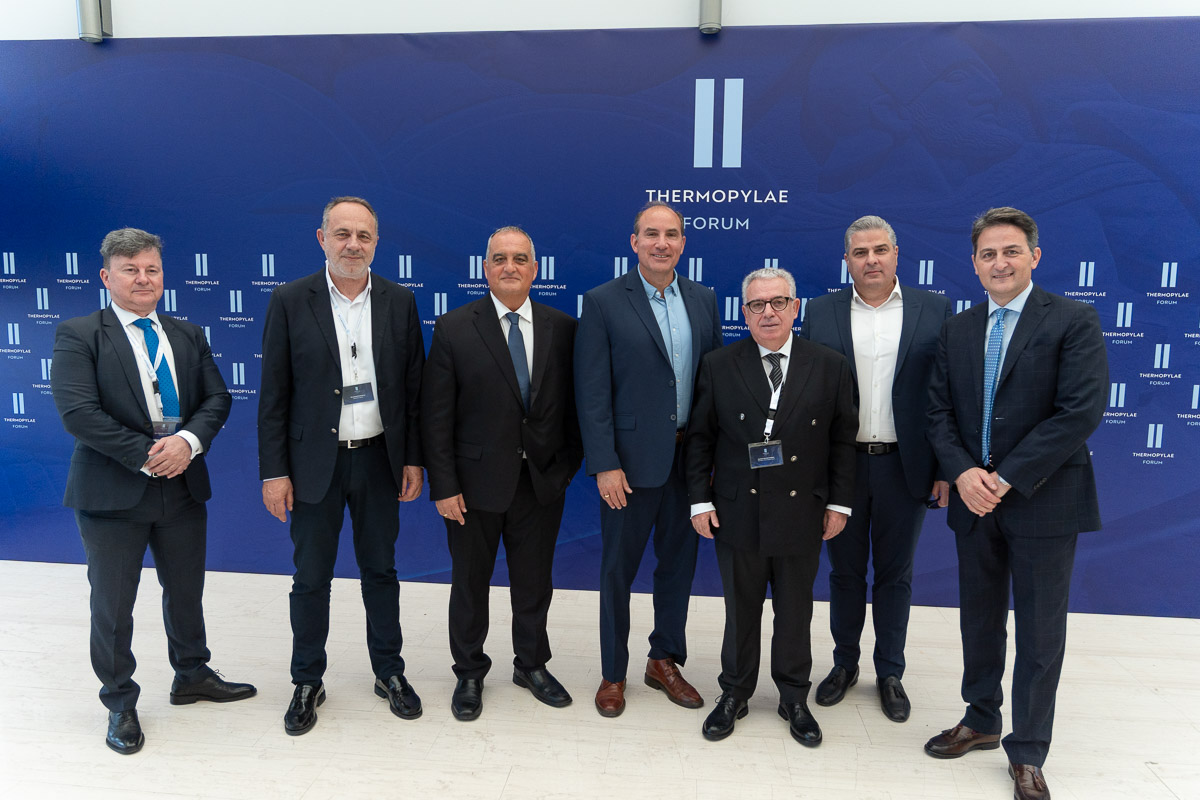
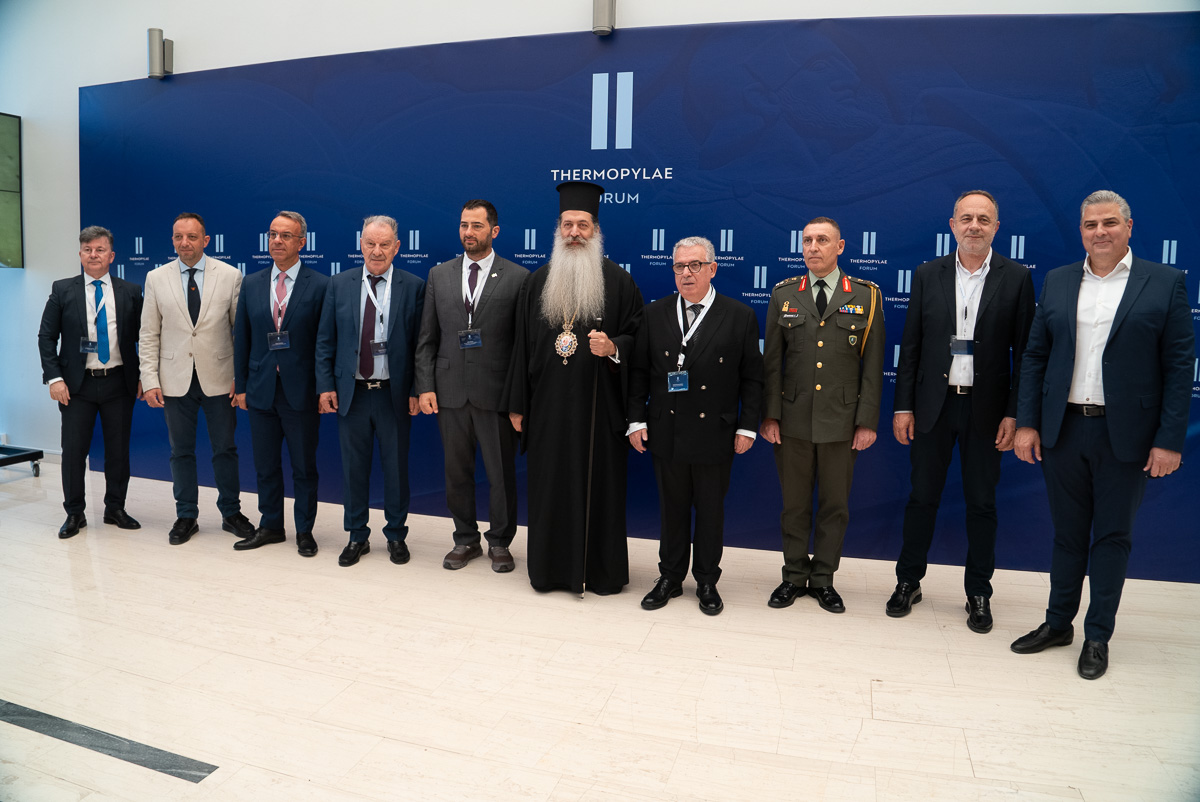
Mamou-Mani’s connection with Greece began with ECOWEEK 2021, organized by Dr. Ilias Messinas, and continued with ESW 2023, where he was invited by Vasilis Bartzokas, founder of Archisearch and Design Ambassador. As a result, his selection for Thermopylae by the two aforementioned figures and the Board of Directors of the Thermopylae Forum became almost self-evident. His proposals impressed with their simplicity and ecological approach, elements that recall his idol, the Brazilian architect Oscar Niemeyer. Mamou-Mani even named his son after him, and during our Zoom conversation, while he was in Australia, he was playing with him as we spoke.
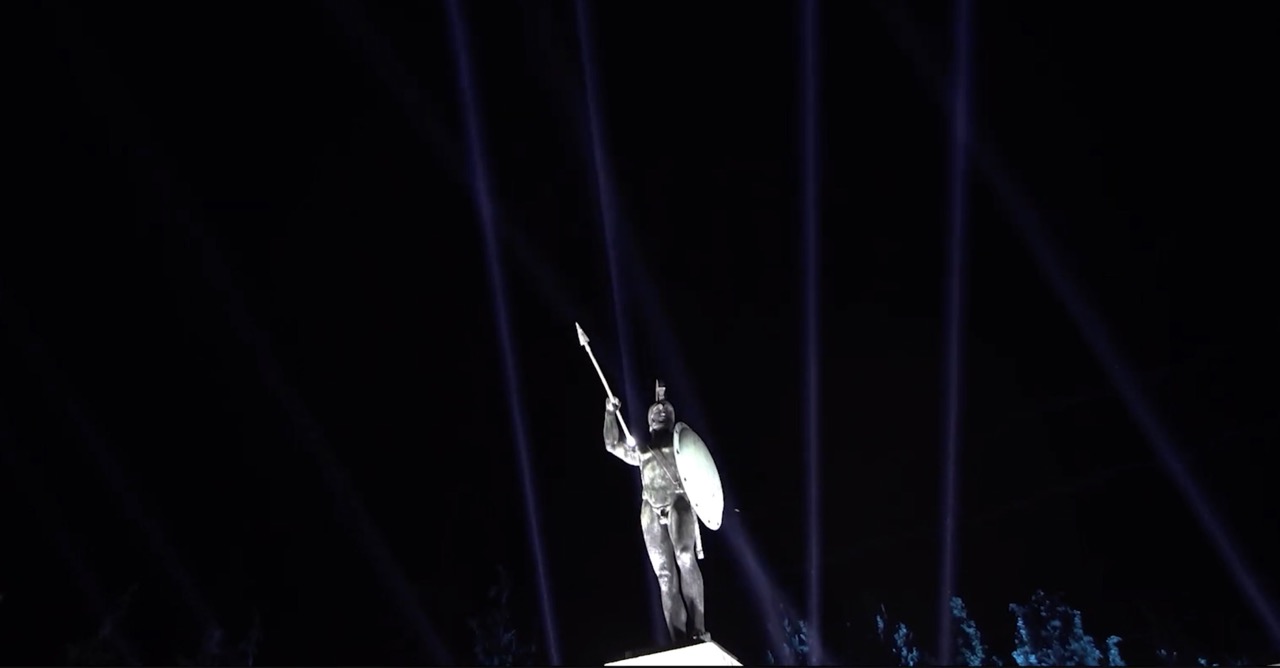
Watch the video Arthur Mamou-Mani prepared for the Thermopylae Forum event held in Athens last December:
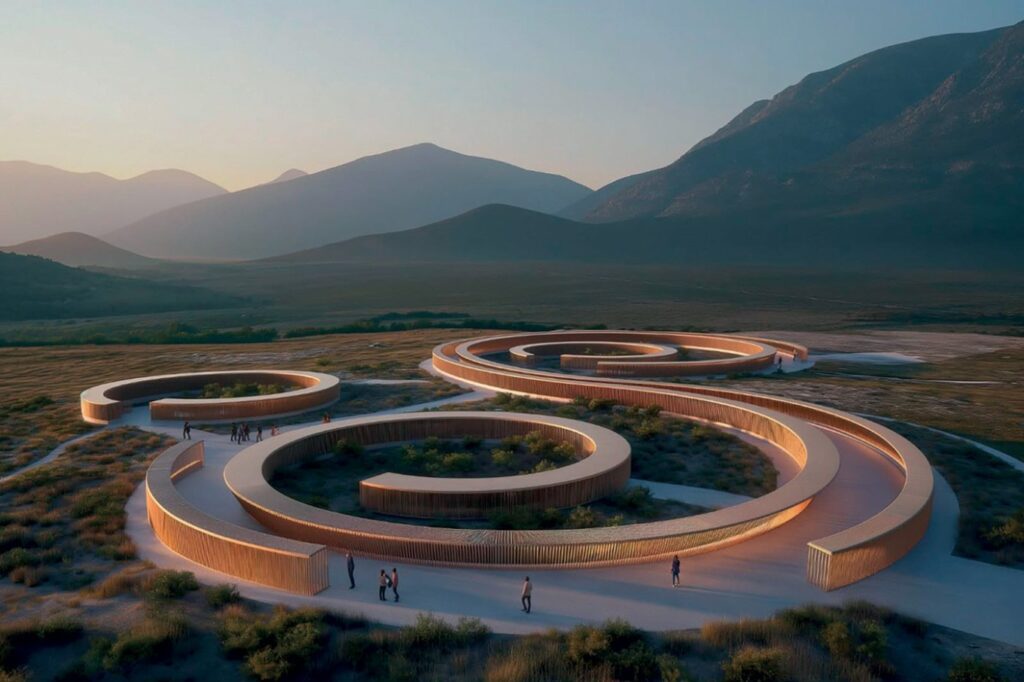
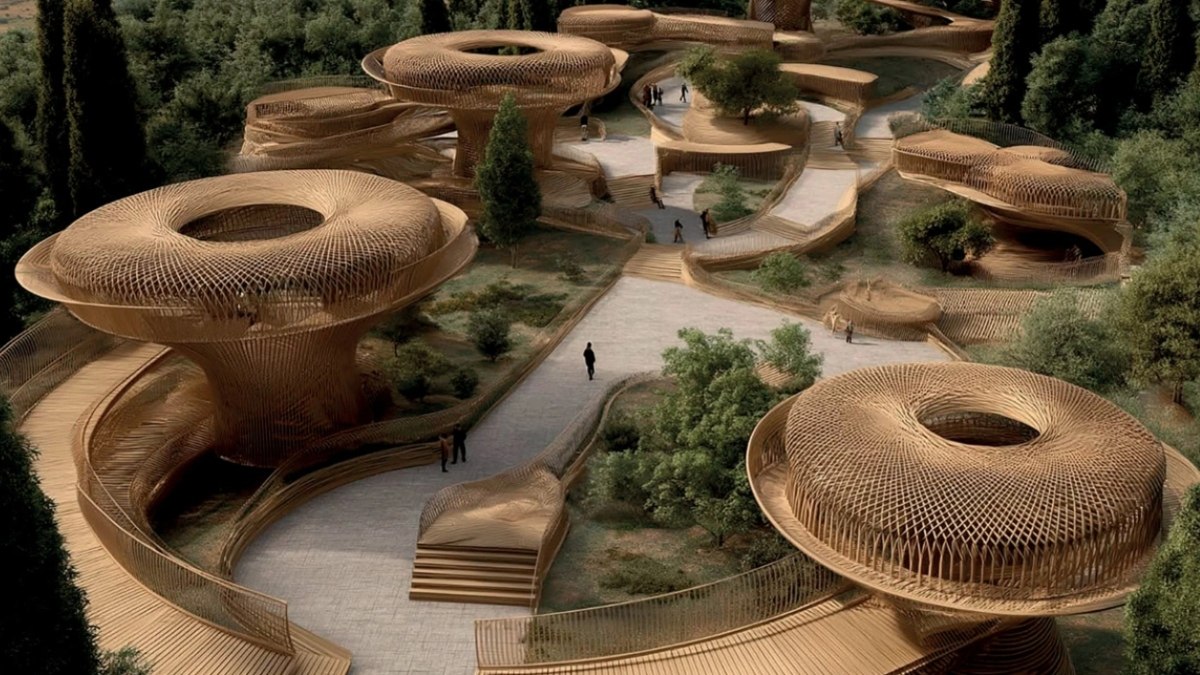
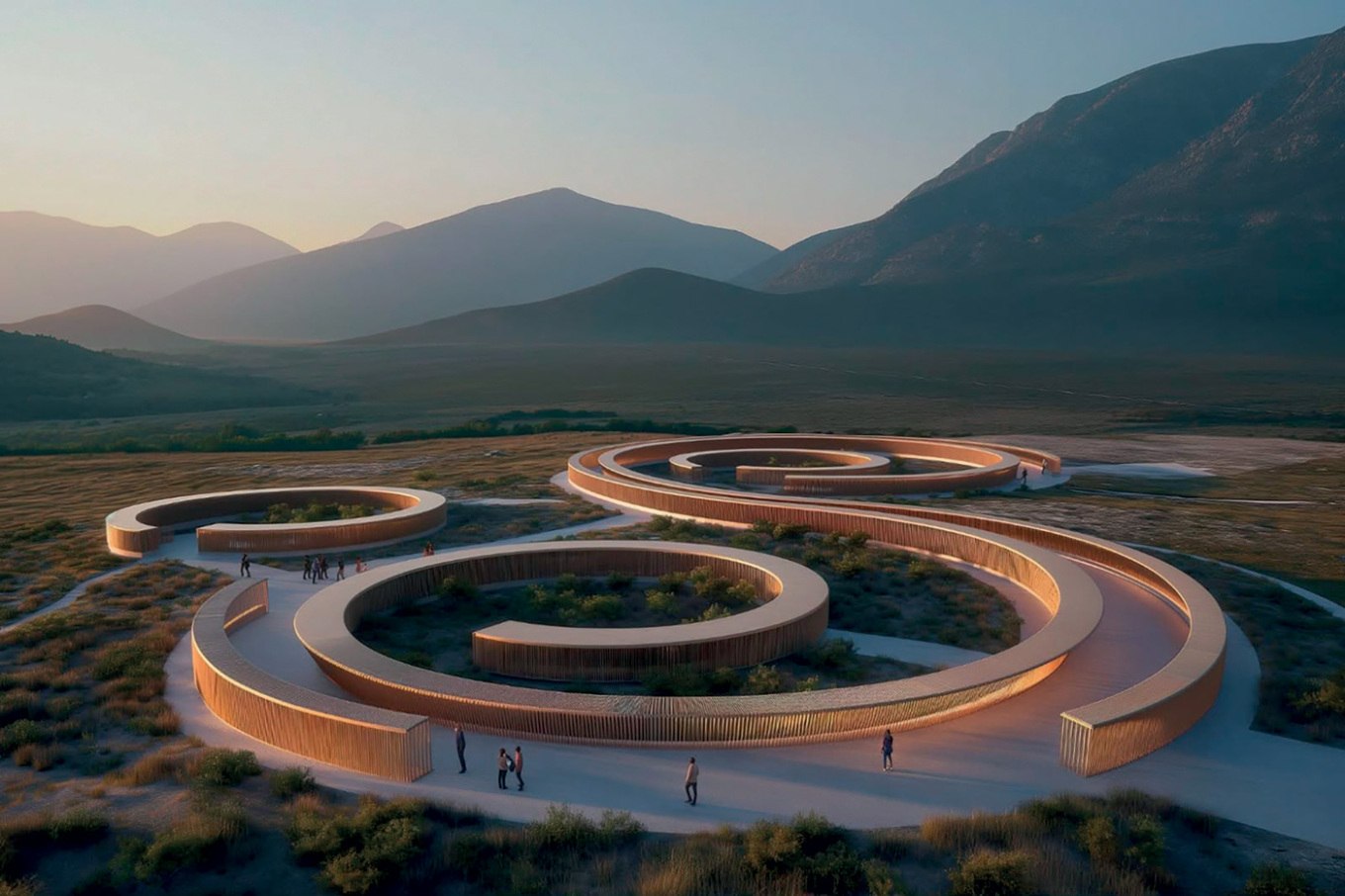
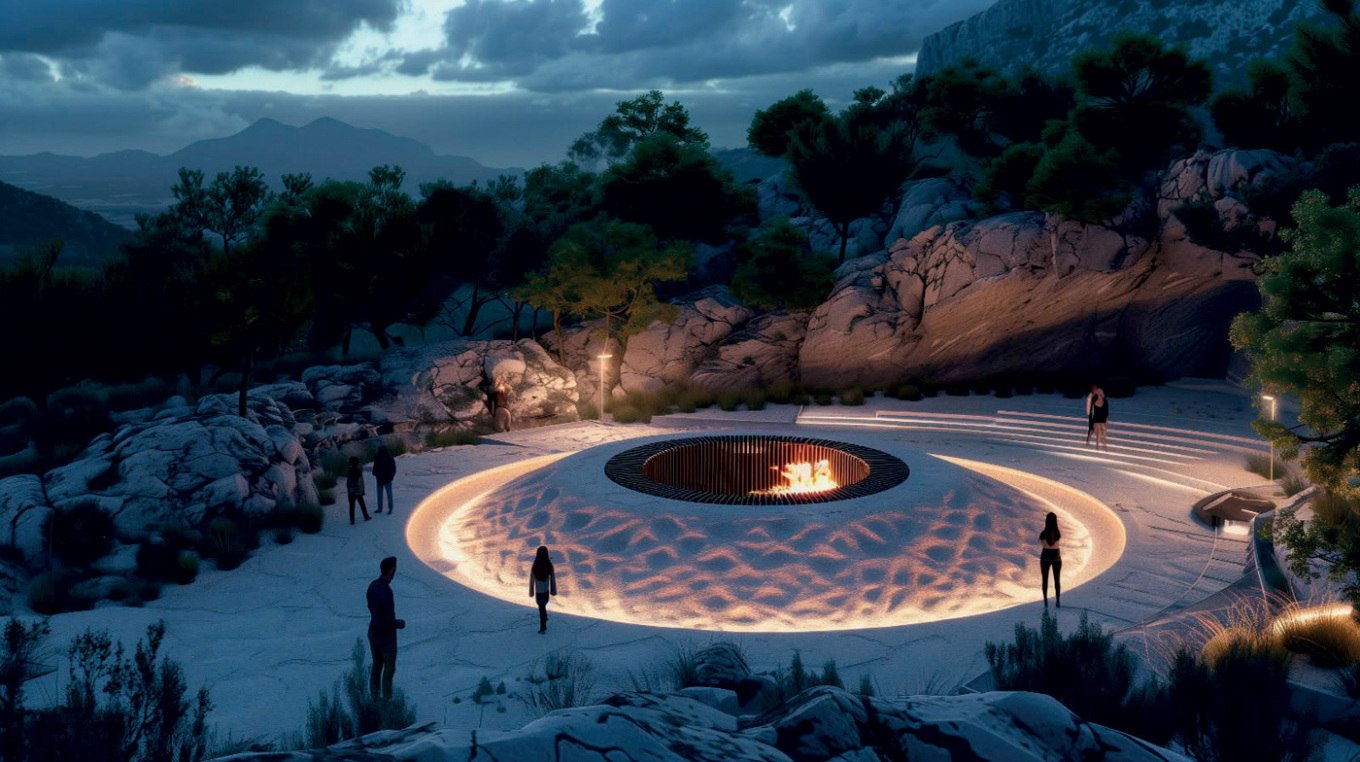
Architectural model of the space the French architect envisions creating at Thermopylae
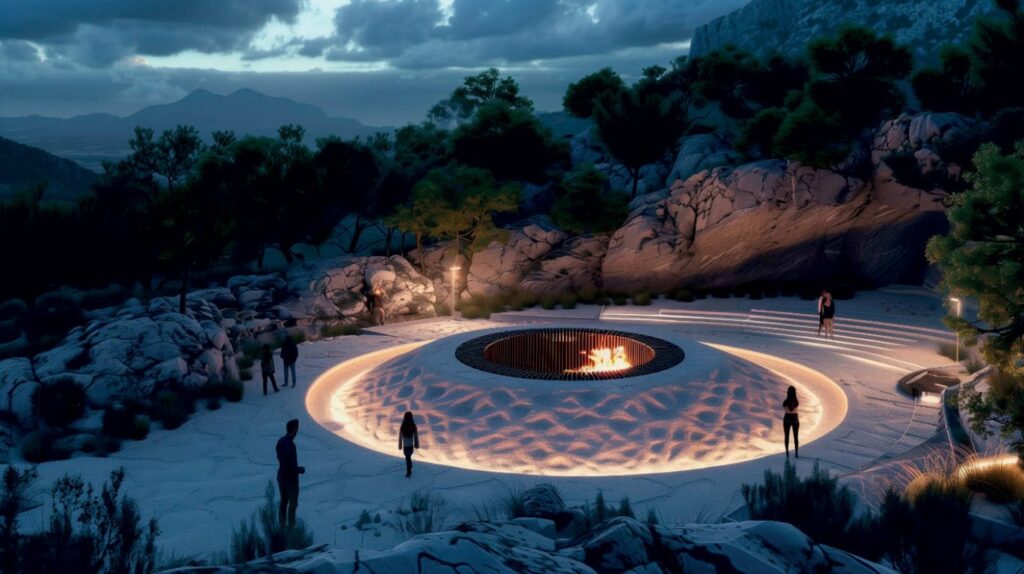
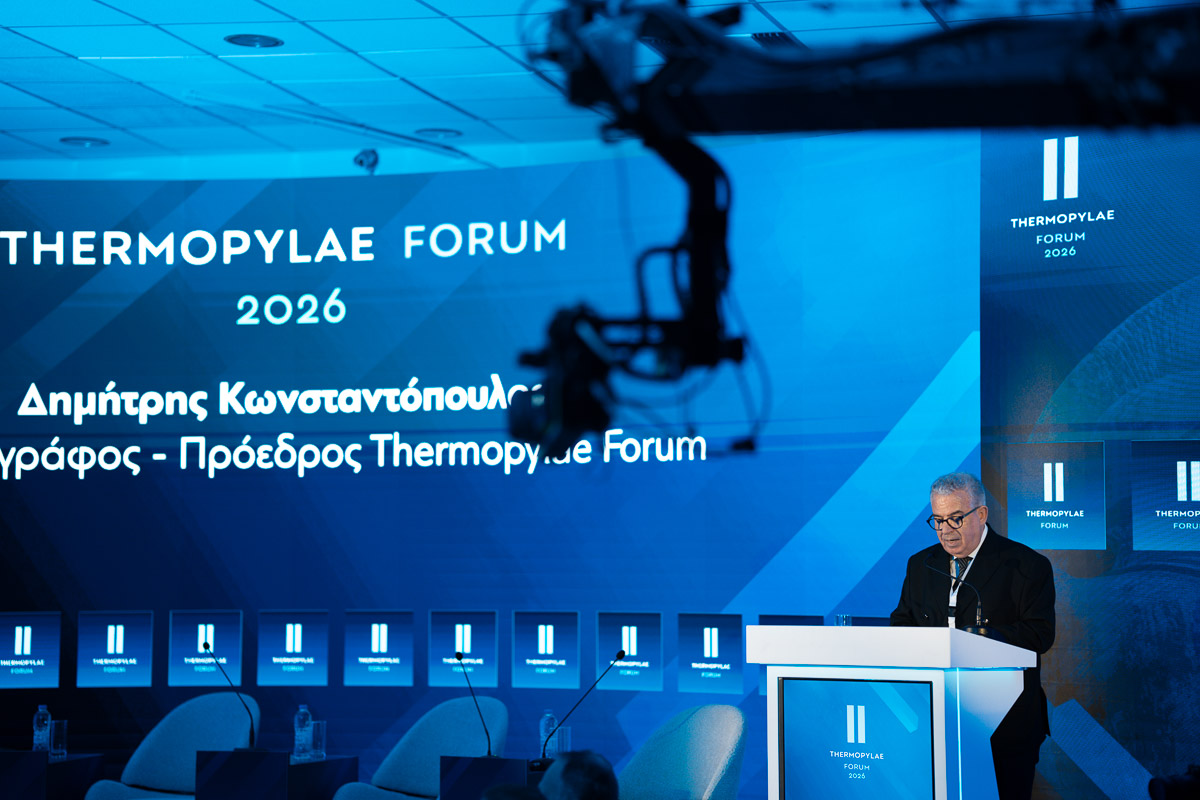
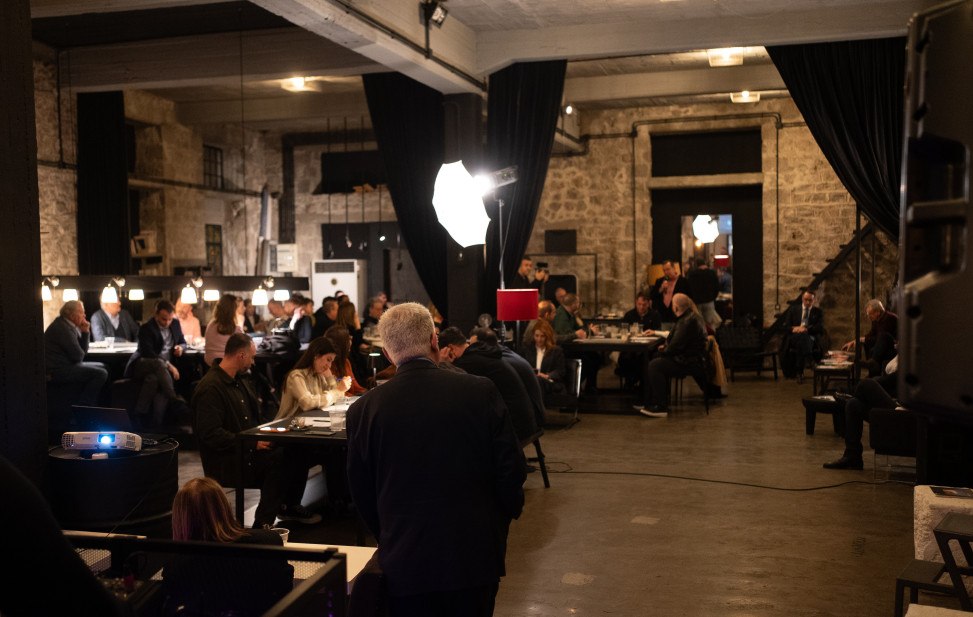
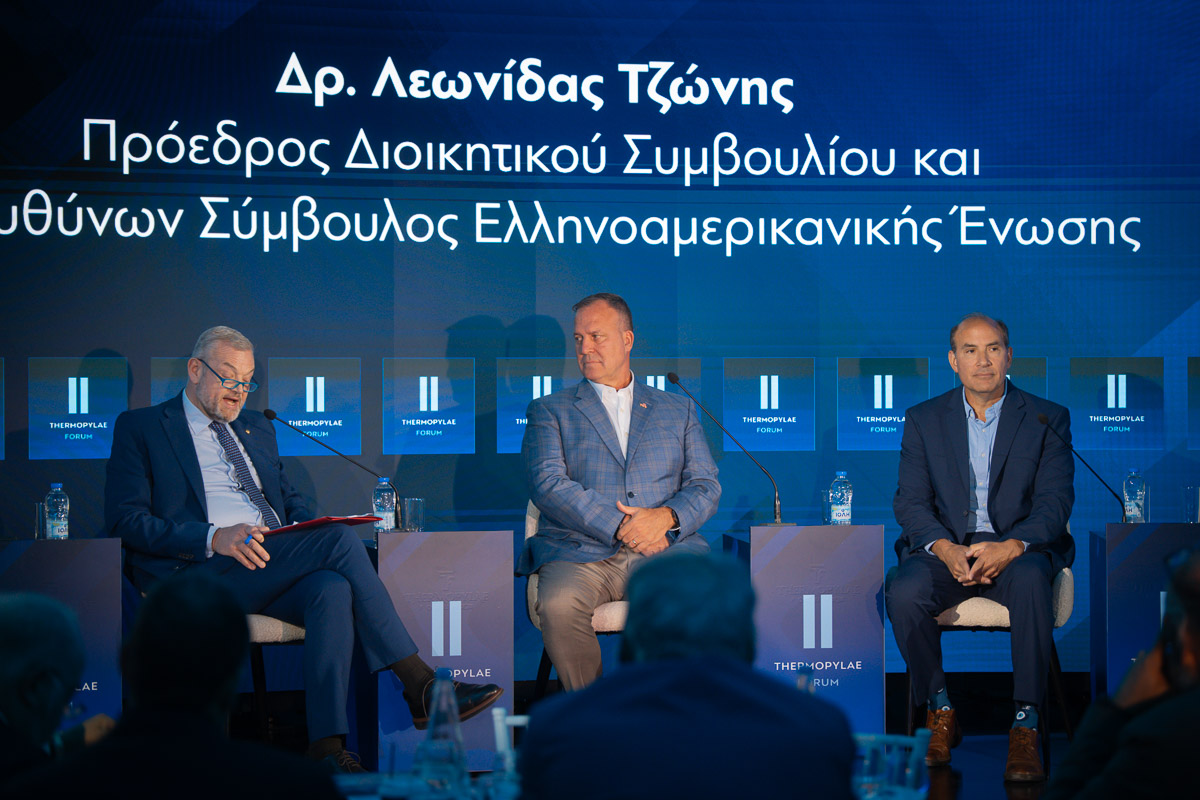
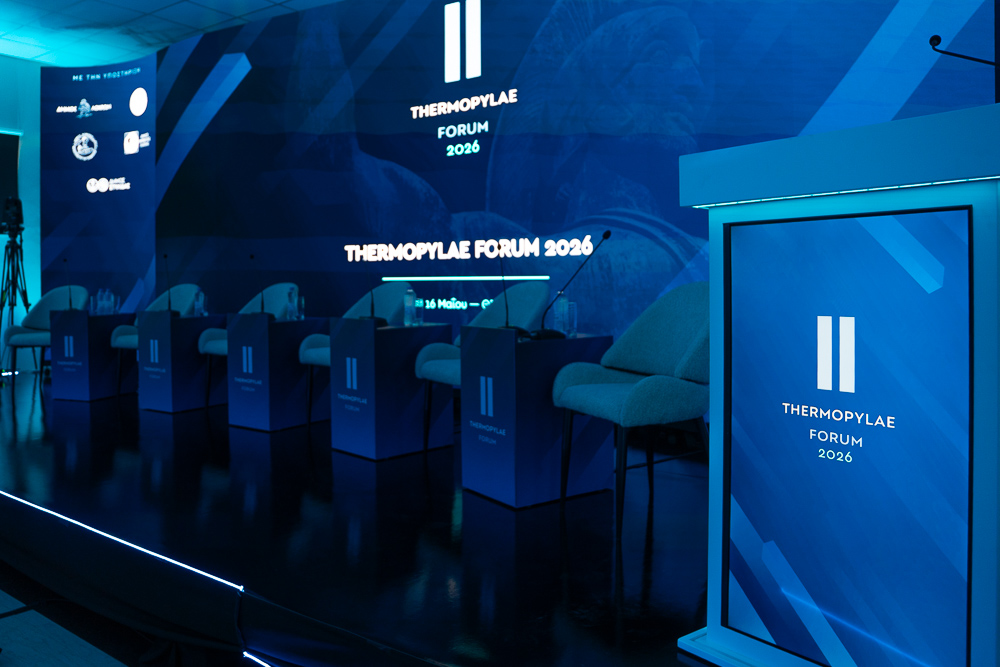
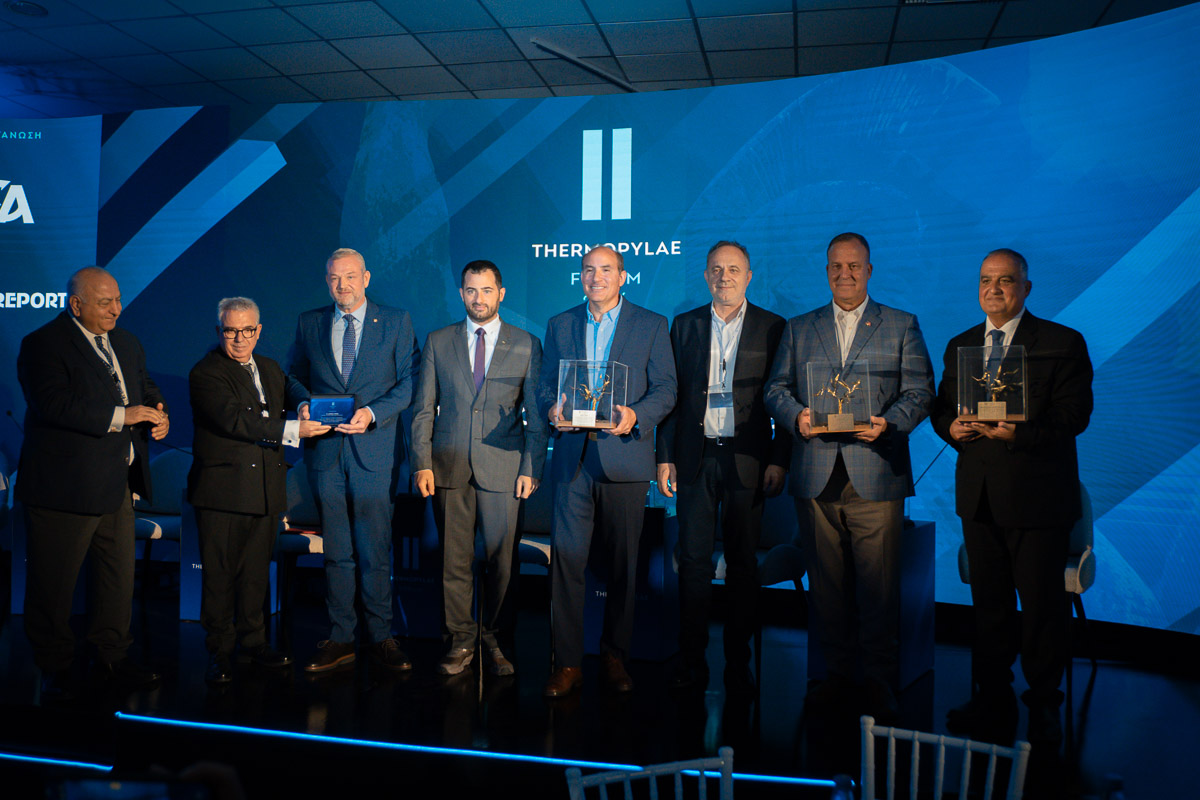
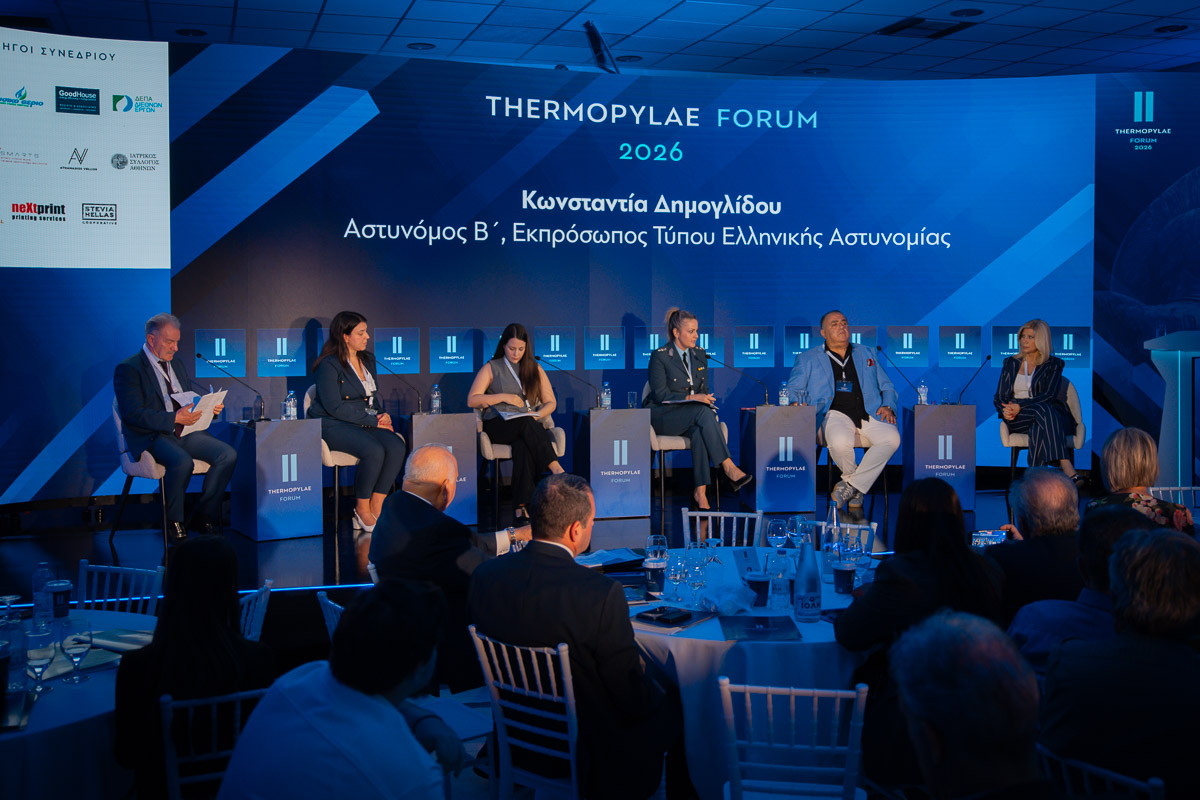
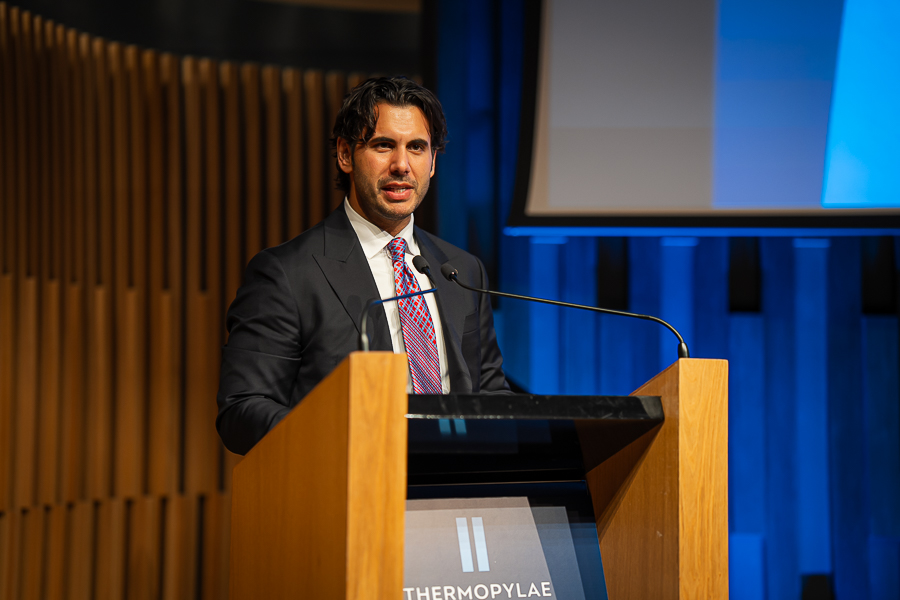
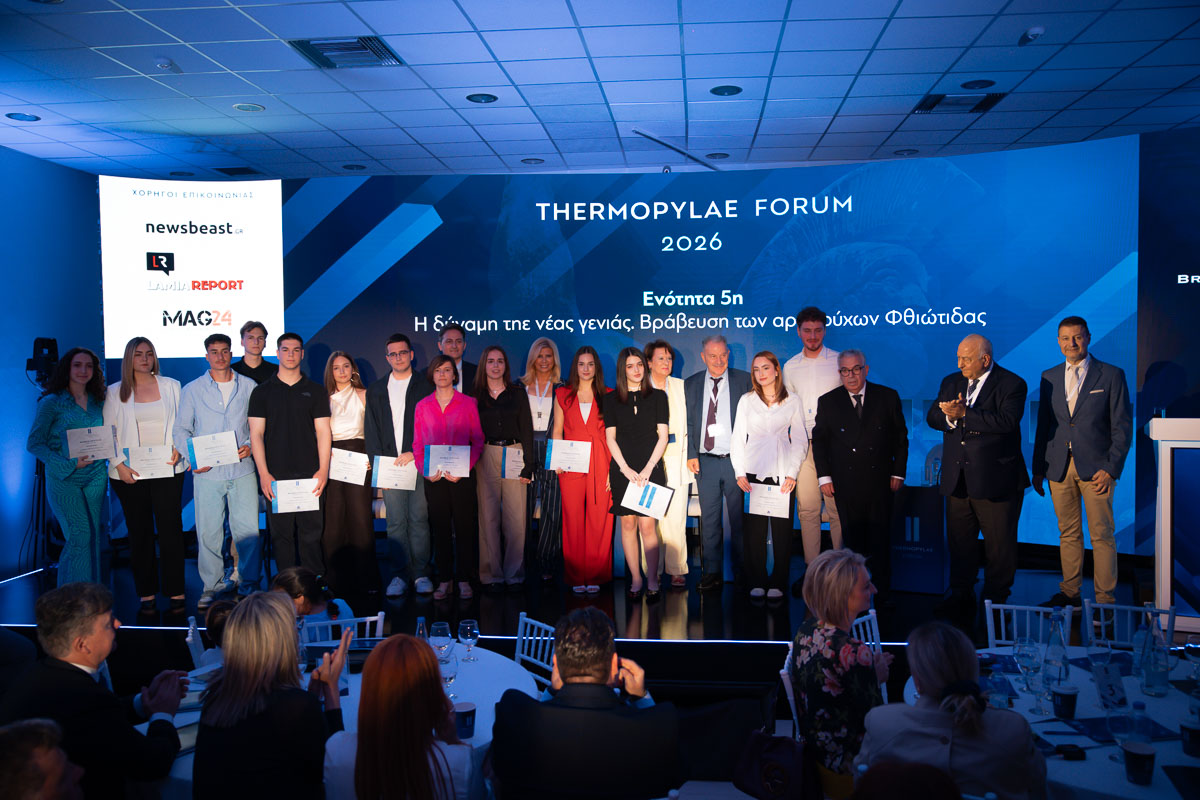
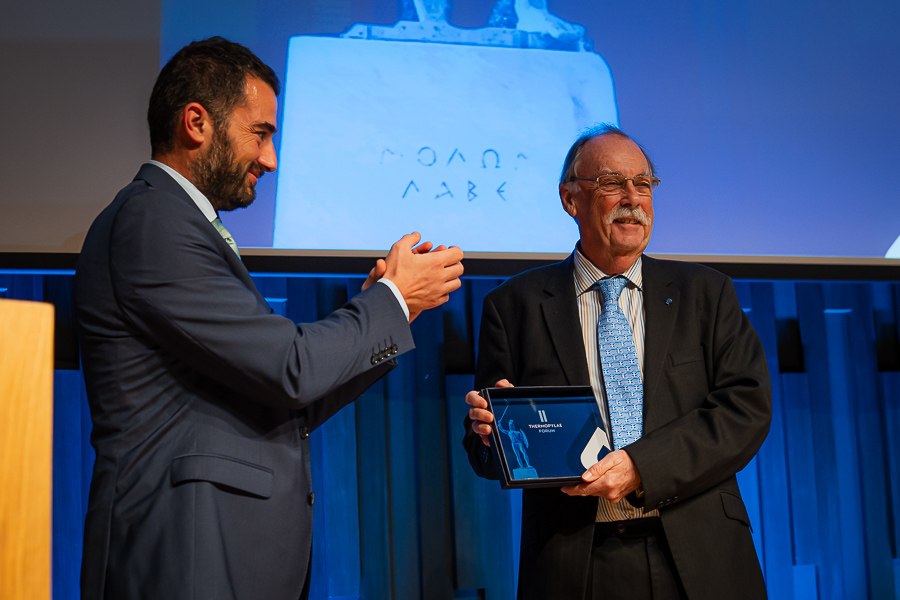
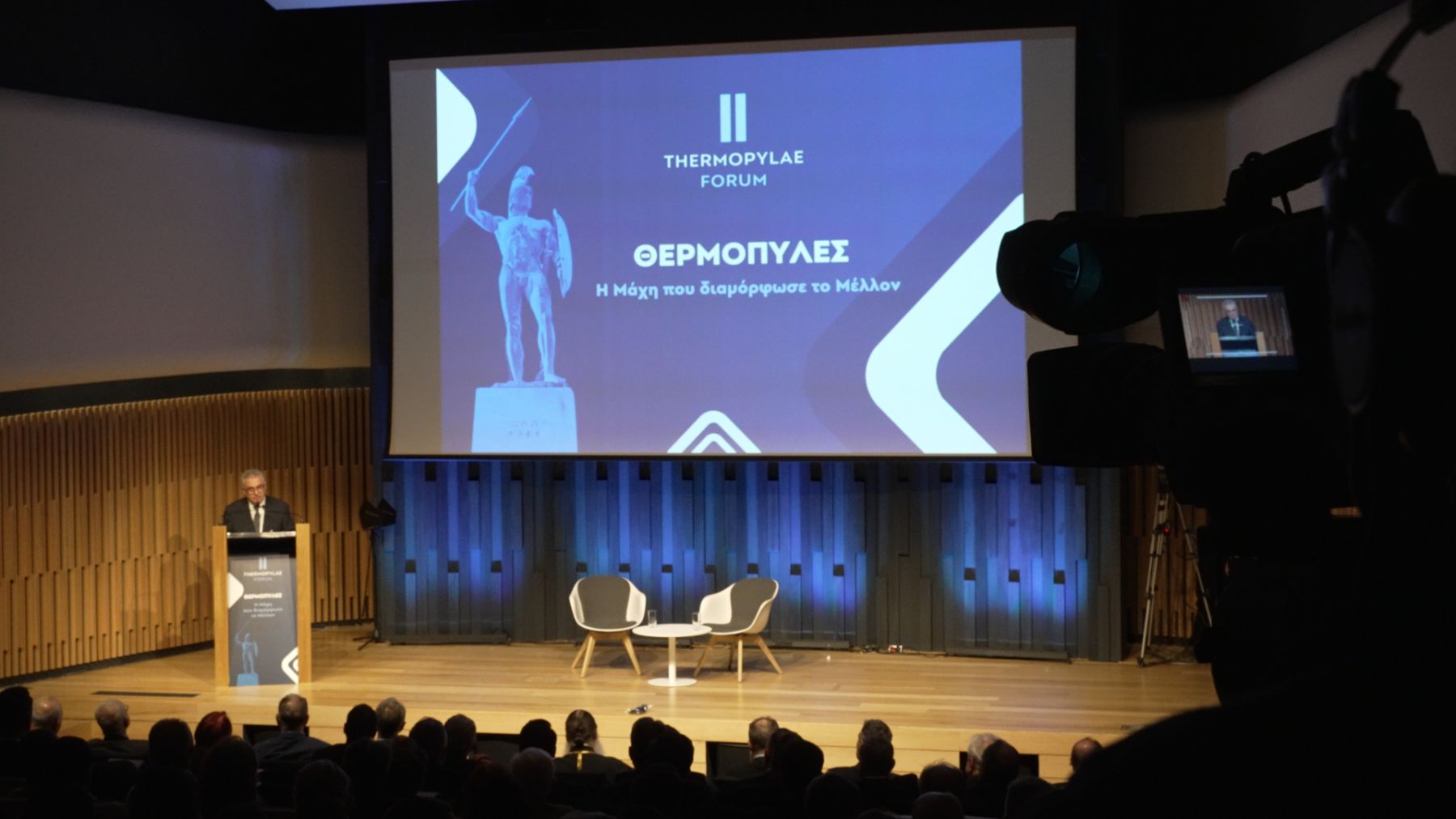
The project was presented at the Thermopylae Forum in December 2025, at the Basil and Elise Goulandris Foundation Museum
Gala: So, what is happening at Thermopylae?
Arthur Mamou-Mani: I was asked to think about an architecture that would feel new, but for a museum.
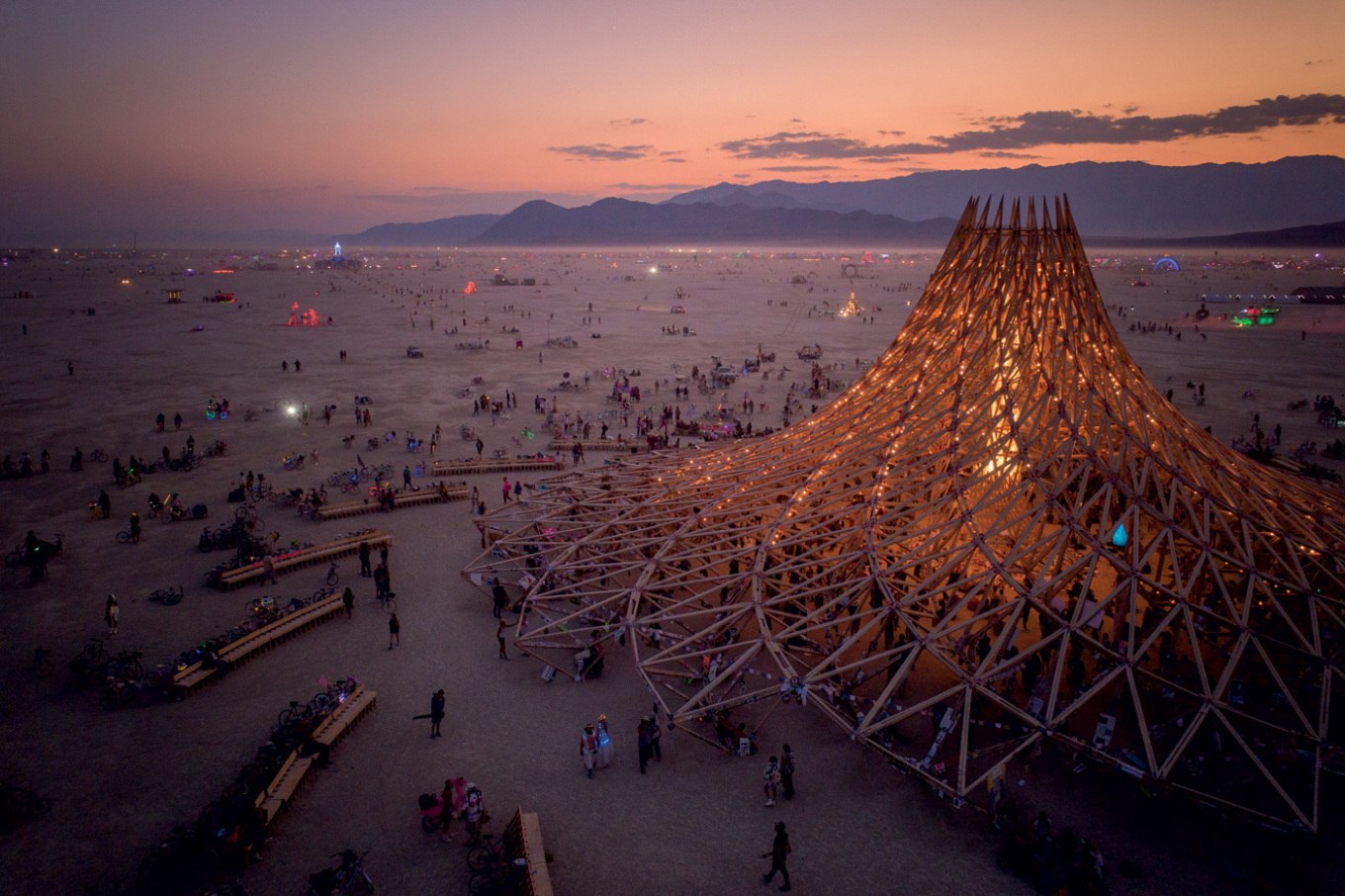
When I work with architecture, it often involves quite natural wooden structures that blend into the landscape, but also “temples,” like the one I designed for Burning Man (Editor’s note: Burning Man is an annual arts and community festival that takes place for one week at the end of August in the Black Rock Desert in Nevada, USA, where tens of thousands of people create from scratch a temporary city filled with large-scale art installations, sculptures, music and performances).
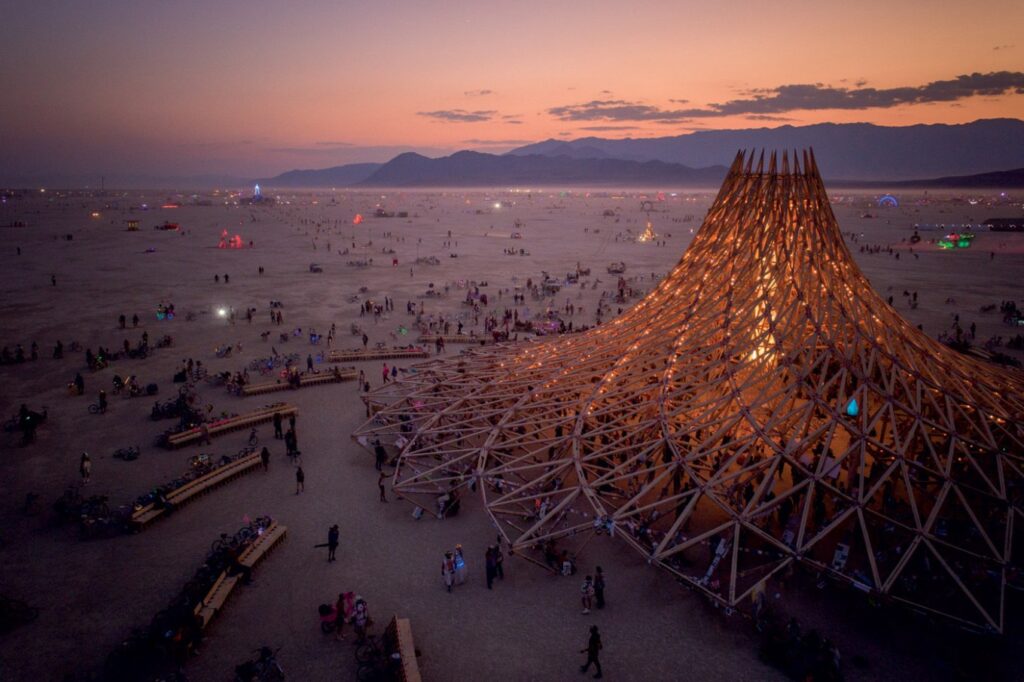
Galaxia, the “temple” of Burning Man (2018)
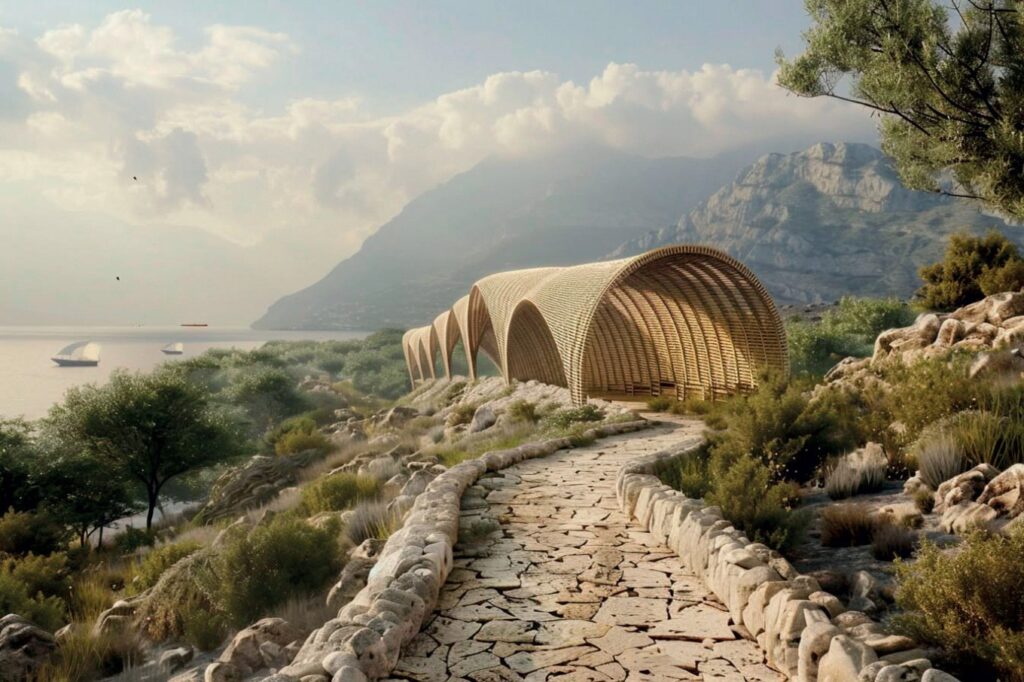
Part of the “walkways” envisioned by the project for visitors to Thermopylae
G.: Tell us a little about your creations at Burning Man.
A.M.-M.: The first of my two collaborations took place in 2018. It was a very large temple, the last temple selected by Burning Man co-founder Larry Harvey (Editor’s note: he died that same year, at the age of 70, in San Francisco after suffering a severe stroke). Larry was an extraordinary person who, every year, chose the creation of a temple for his festival. We are not talking about a religious temple, but about something that brought all people together and gave even more soul to the event. We built it with 200 volunteers. In fact, I got married to my wife there!
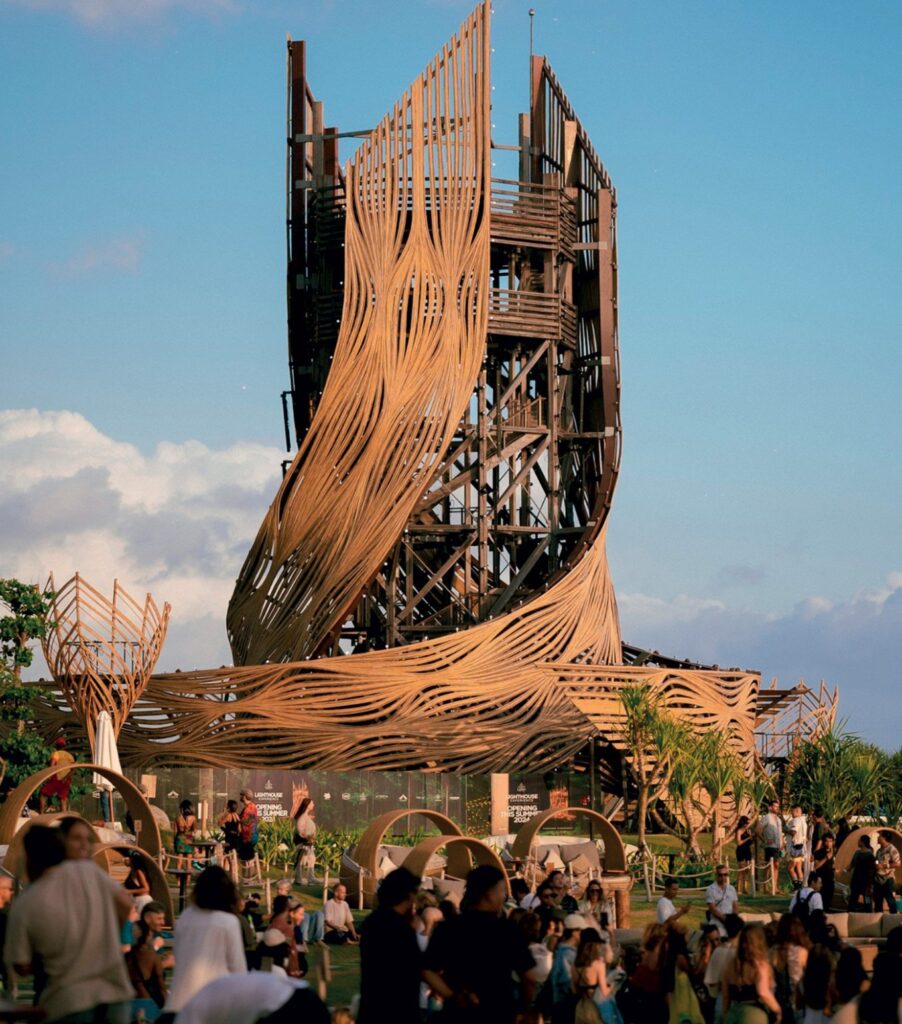
Construction phase of the THK Tower in Bali
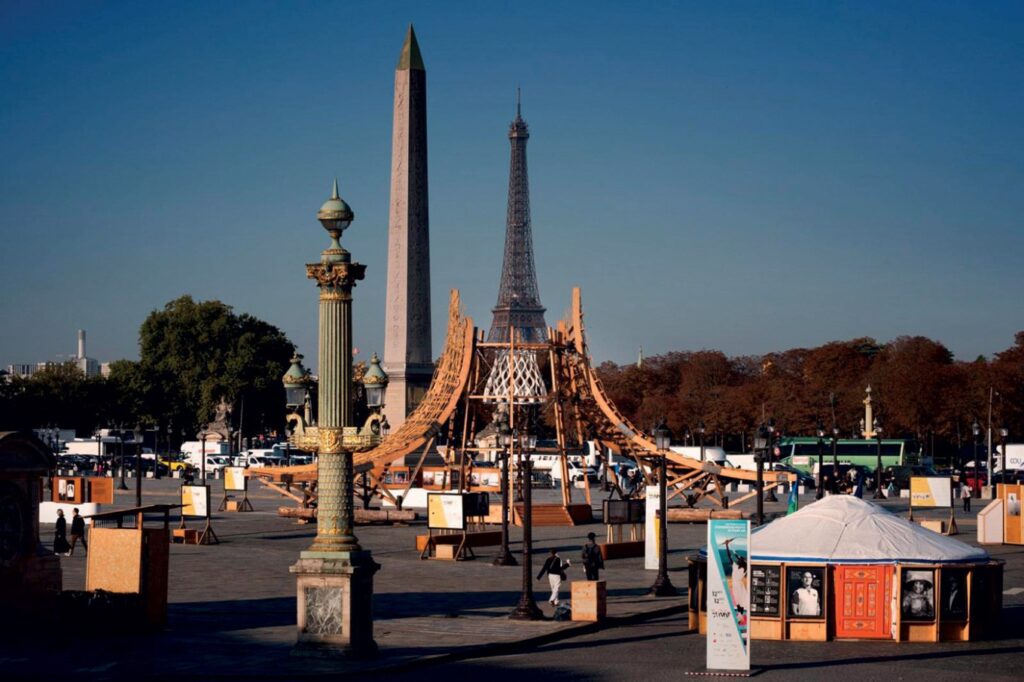
The “Concordia” installation was designed in 2025 for the Photoclimat Biennale in Paris, dedicated to photography with a social and environmental focus.
G.: How did this collaboration at Thermopylae come about?
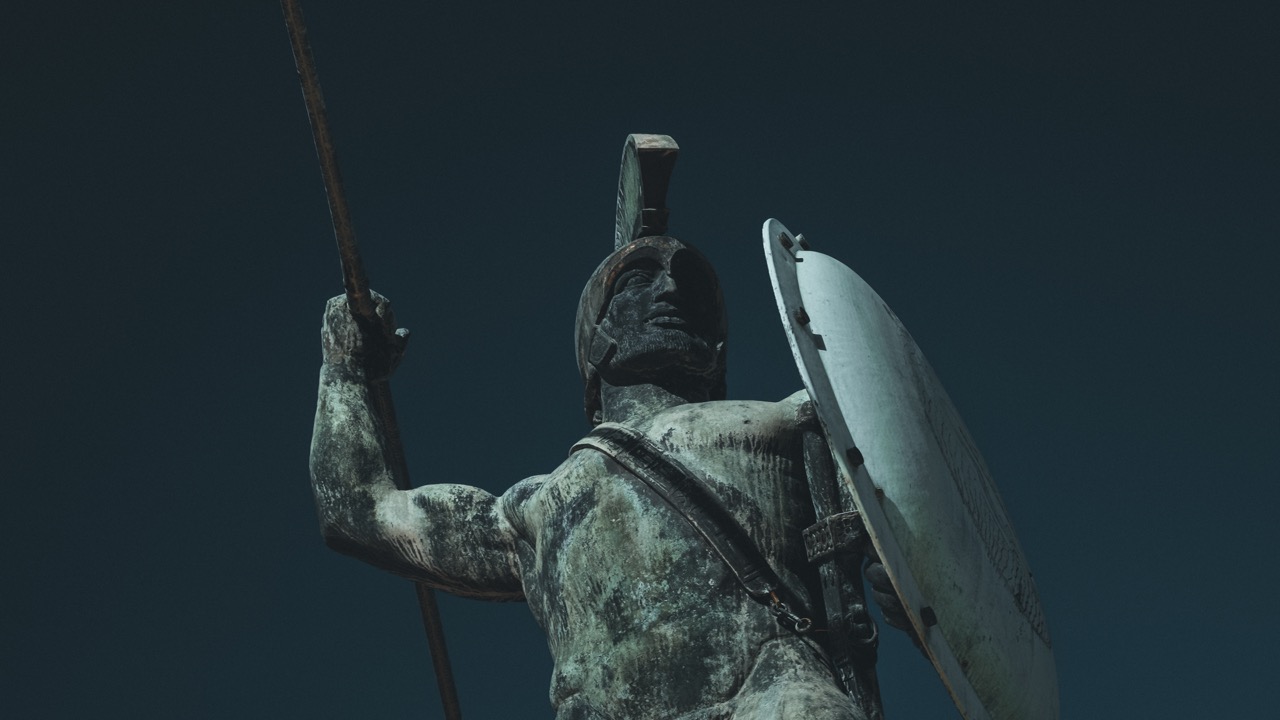
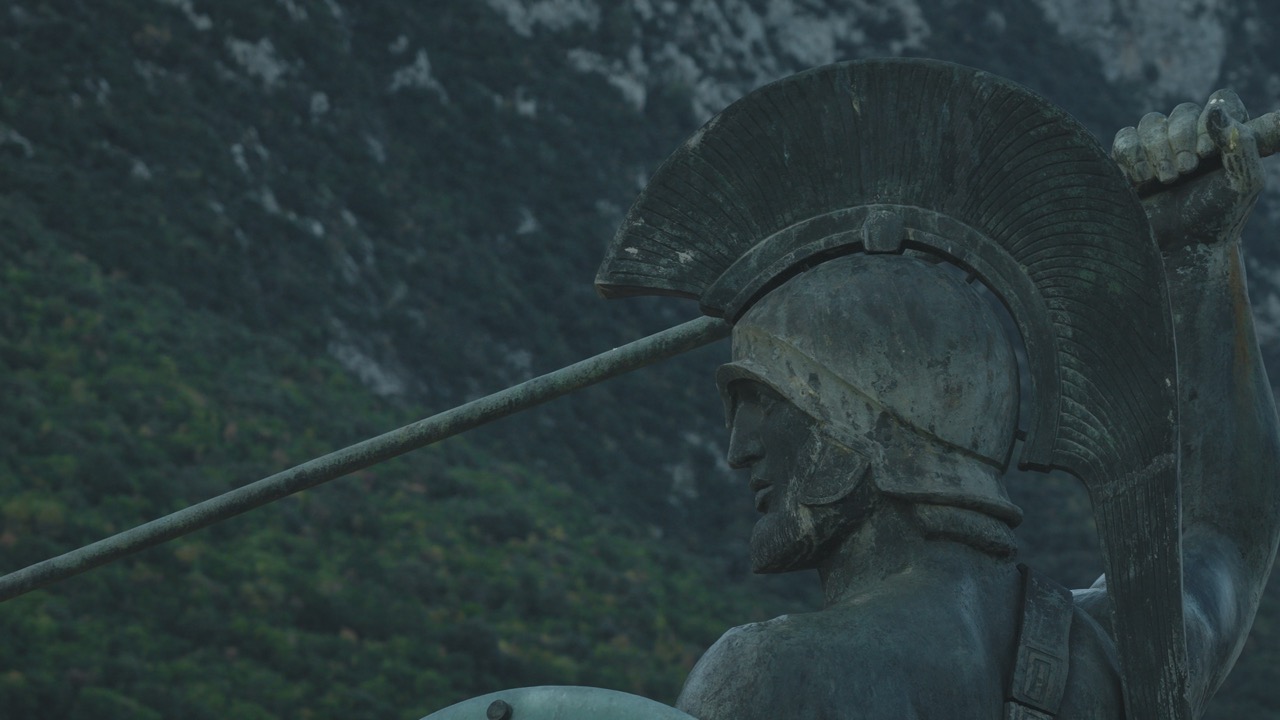
A.M.-M.: When I was asked to collaborate, they told me, “This is the place where the battle of Leonidas’ 300 Spartans took place.” King Leonidas, despite the adversity, defeated the Persian army through courage and resilience — values that are worth communicating once again, this time to the whole world. And that is how I accepted the project.
G.: So you intend to apply the values of Thermopylae in order to create?
A.M.-M.: That is what interests me — the values that give birth to creation. In other words, before I even arrive at a form, I prefer to begin with concepts such as courage, resilience, hope — that feeling that makes someone say, “We can do this!” The fact that we know we are very few to win a battle does not mean that we cannot win it. There is a very deep hope within that.
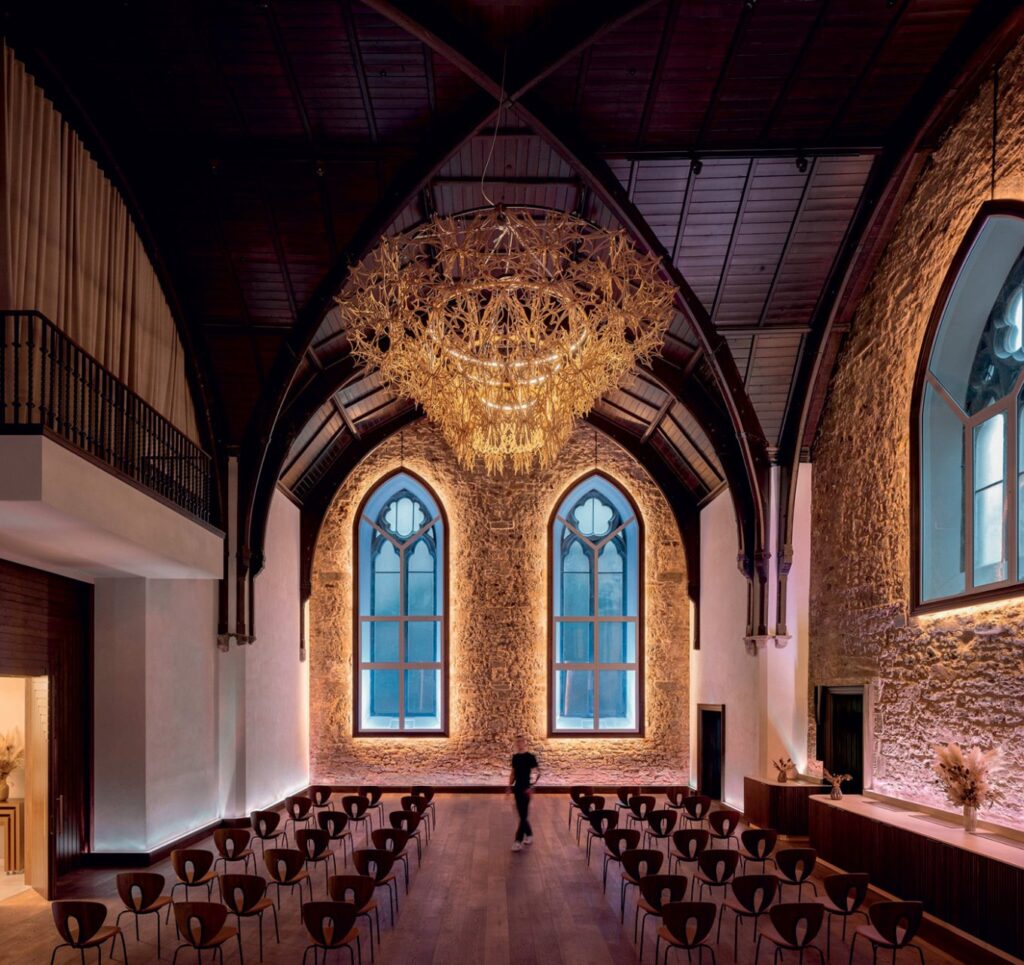
The chandelier designed by Mamou-Mani for the Virgin Hotel in Edinburgh
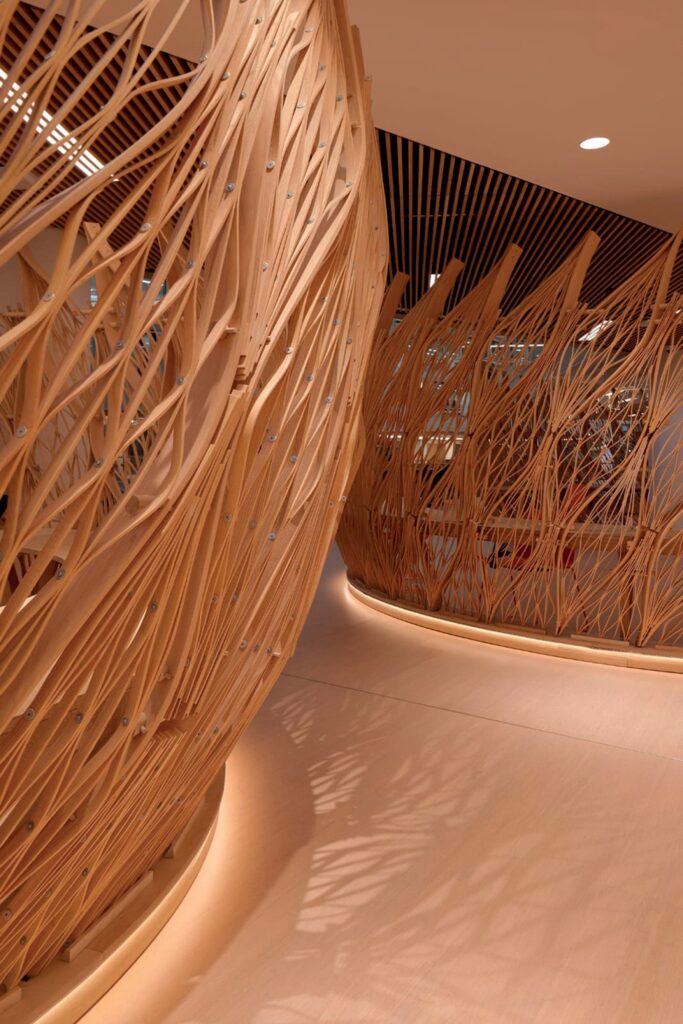
“Cabanas,” one of the three works in Orange’s main building in Paris
G.: Perhaps the power of faith?
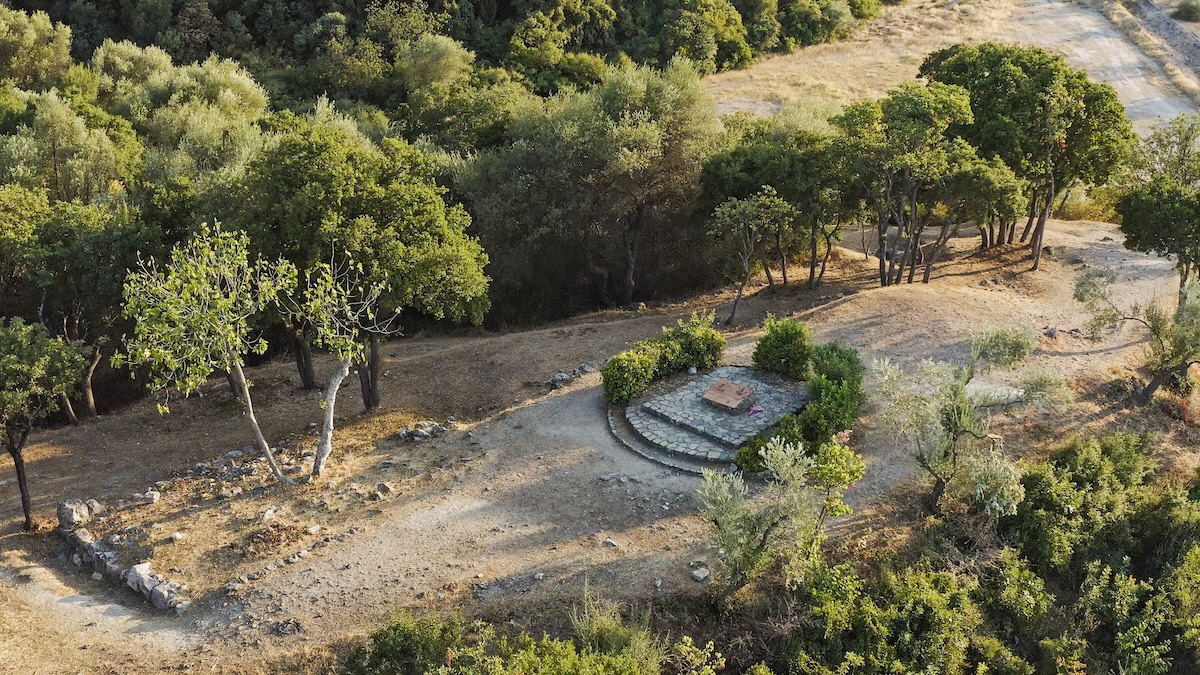
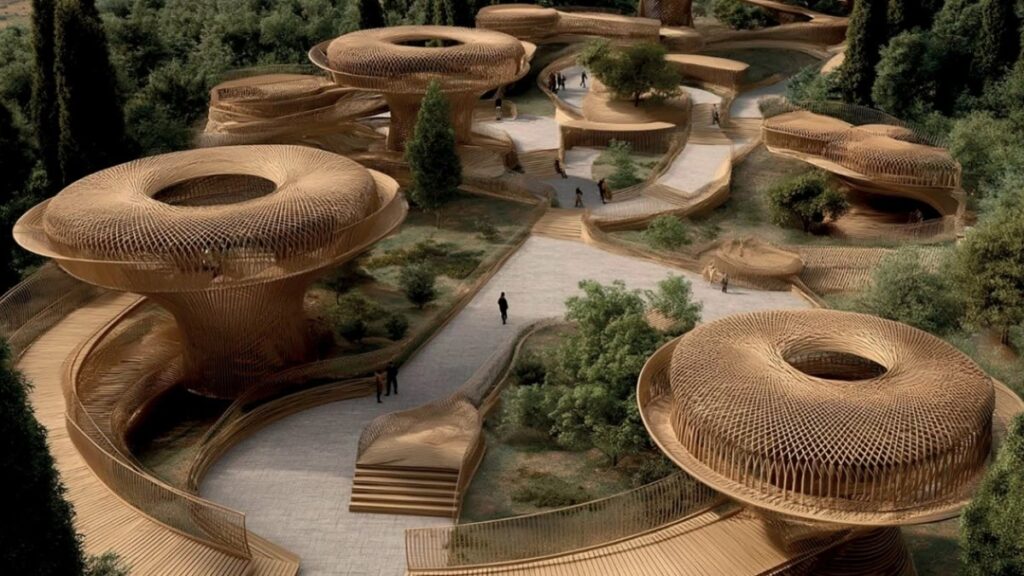
A.M.-M.: Faith, exactly. Faith must resonate in our times. Starting from the idea, the architecture can also be designed on the basis of the landscape, which at Thermopylae consists of mountains with a very narrow passage between them. So the project begins with the idea and continues with an understanding of the environment. It is a museum that will explain the battle, while workshops will also operate alongside it, narrating the story in an interactive way. Instead of something, how should I put it, lifeless, we will create something more alive — we will wander through wooden structures, we will wander through a landscape. It will be like a walk, therefore something that also involves the participation of the body.
G.: So the main work at Thermopylae will be the museum?
A.M.-M.: Yes. However, next to it there will be observation platforms and amphitheatres built into nature. So it will be an interactive museum, where the visitor will not be a passive observer. Especially in the case of the historic Battle of Thermopylae, the museum dedicated to it cannot possibly be passive. I certainly hope that this new museum will not be a place where one goes simply to glance at a few swords or shields and then leave. On the contrary, the courage and the values of Leonidas’ 300 must be spread across the world.